|
|
|
See Also:
|
Wet Etching
Wet etching is generally isotropic, i.e., it proceeds in all directions at the same rate. An etching process that is not isotropic is referred to as 'anisotropic.' An etching process that proceeds in only one direction (e.g., vertical only) is said to be 'completely anisotropic'.
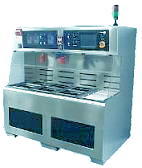
Figure 1. Example of a Wet Etching Station; source: www.futurefab.com
In semiconductor fabrication, a high degree of anisotropy is desired in etching because it results in a more 'faithful' copy of the mask pattern, since only the material not directly under the mask are attacked by the etchant. Isotropic etchants, on the other hand, can etch away even the portion of material that's directly under the mask (usually in the shape of a quarter-circle), since its horizontal etching rate is the same as its vertical rate.
When an isotropic etchant eats away a portion of the material under the mask, the etched film is said to have 'undercut' the mask. The amount of 'undercutting' is a measure of an etching parameter known as the 'bias.' Bias is simply defined as the difference between the lateral dimensions of the etched image and the masked image. Thus, the mask used in etching must compensate for whatever bias an etchant is known to produce, in order to create the desired feature on the wafer.
<Proceed to Page 2 - Selectivity and Wet Etch Solutions>
Copyright
© 2004
www.SemiconFarEast.com.
All Rights Reserved. |